NPA Application
Apply Nano Polymer Adhesive to the build plate — standard, diluted 1:1 and hot methods, plus releasing stuck parts and stripping old buildup.
NPA Application covers how to apply, maintain, and remove Vision Miner High Temperature Nano Polymer Adhesive from the build plate. Use NPA with every material - from PLA and ABS all the way up to high-performance materials like PEEK, PEKK, and ULTEM. NPA both holds the part during printing and lets it release cleanly afterward, protecting the carbon fiber build plate.
You do not need to reapply NPA before every print - a single coating lasts multiple prints. See How often should I clean and reapply NPA? in the FAQ for reapplication intervals.
NPA is for all materials, not only high-temperature ones
Do not skip NPA for "easy" materials like PLA. On a bare build plate the part will detach mid-print, and a detached part can damage the printer. The only exception is polypropylene - see Material Notes and Exceptions.
Applying NPA correctly matters just as much as applying it at all. Too thick a coating can make parts stick excessively hard to the plate - follow the application technique described below.
Before you begin - safety and risk
Read the Safety - Before You Begin article before working on your printer. It covers electrical hazards, hot surfaces, moving parts, and other risks that could cause injury or equipment damage.
YouTube media is off. Allow it in cookie settings to load this video.
Watch on YouTubeClean plate is critical
A clean build plate is the most important factor for good adhesion. Oils from fingers, dust, and leftover residue all reduce adhesion. Clean thoroughly before every application.
Tools and Materials
- Vision Miner High Temperature Nano Polymer Adhesive (NPA)
- Isopropyl alcohol (IPA)
- Windex or similar glass cleaner
- Lint-free cloths
- Adhesive brush (included with printer)
- Scraper (included with printer)
- Brand new razor blade (for deep cleaning only)
- Small glass jar with lid (for diluted NPA method)
- Gloves and eye protection
1. Pre-Application Cleaning
Before applying adhesive, build plate must be completely free of contaminants.
- Verify build plate is cool and removed from printer (or at room temperature if cleaning in place).
- Dampen lint-free cloth with IPA.
- Wipe the entire build plate surface to remove dirt, debris, oils, and previous adhesive residue.
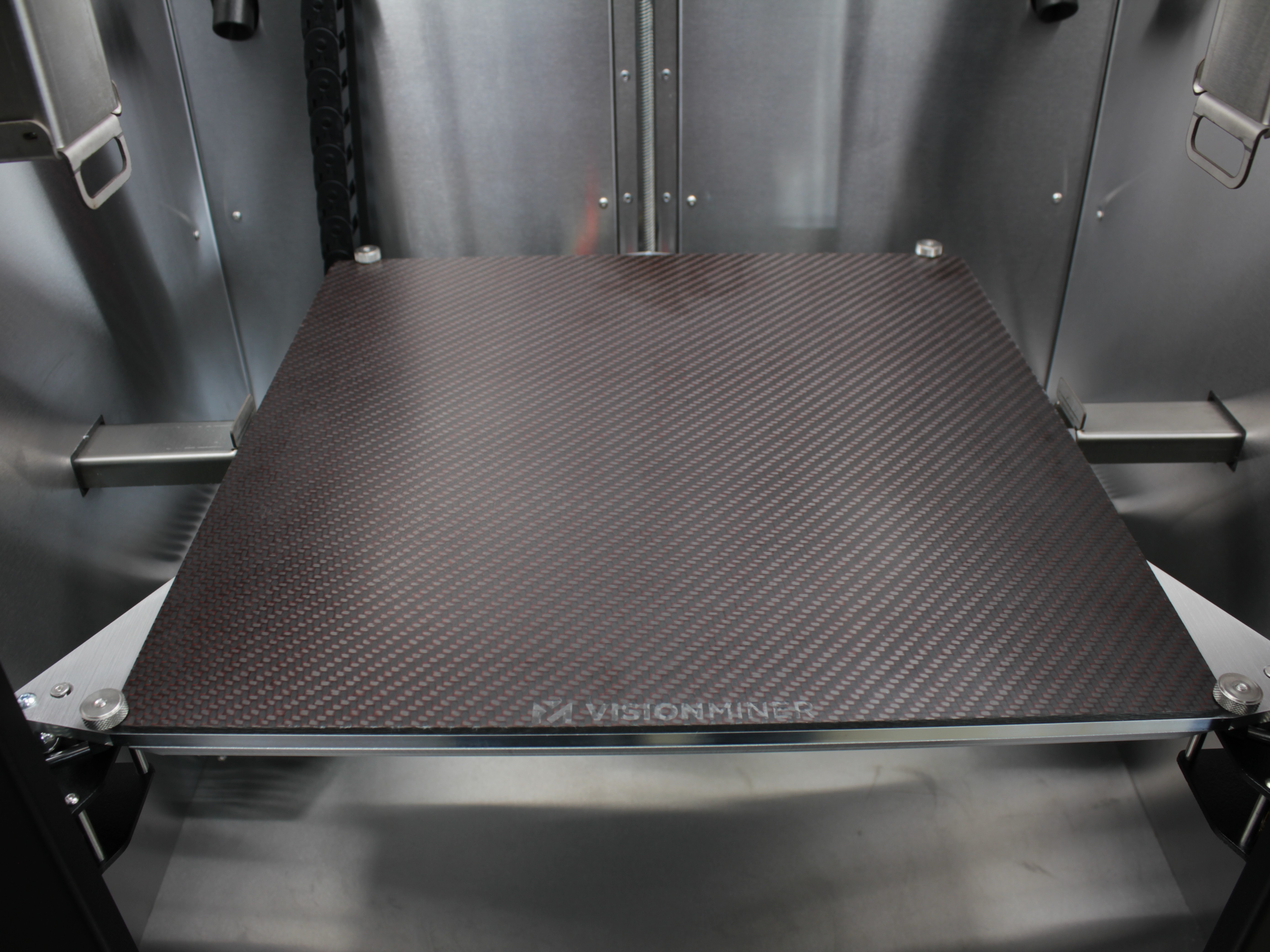
- Inspect the surface. If residue remains, repeat wipe. The plate should be spotless before proceeding.
2. Standard Application (Cold Build Plate)
Primary method - apply NPA to cold, clean build plate.
- Verify build plate is cold and completely clean (see section above).
- Hold the NPA bottle like a pen. Gently squeeze to draw parallel lines across the build plate, spacing them about 25 mm (≈ 1 in.) apart.
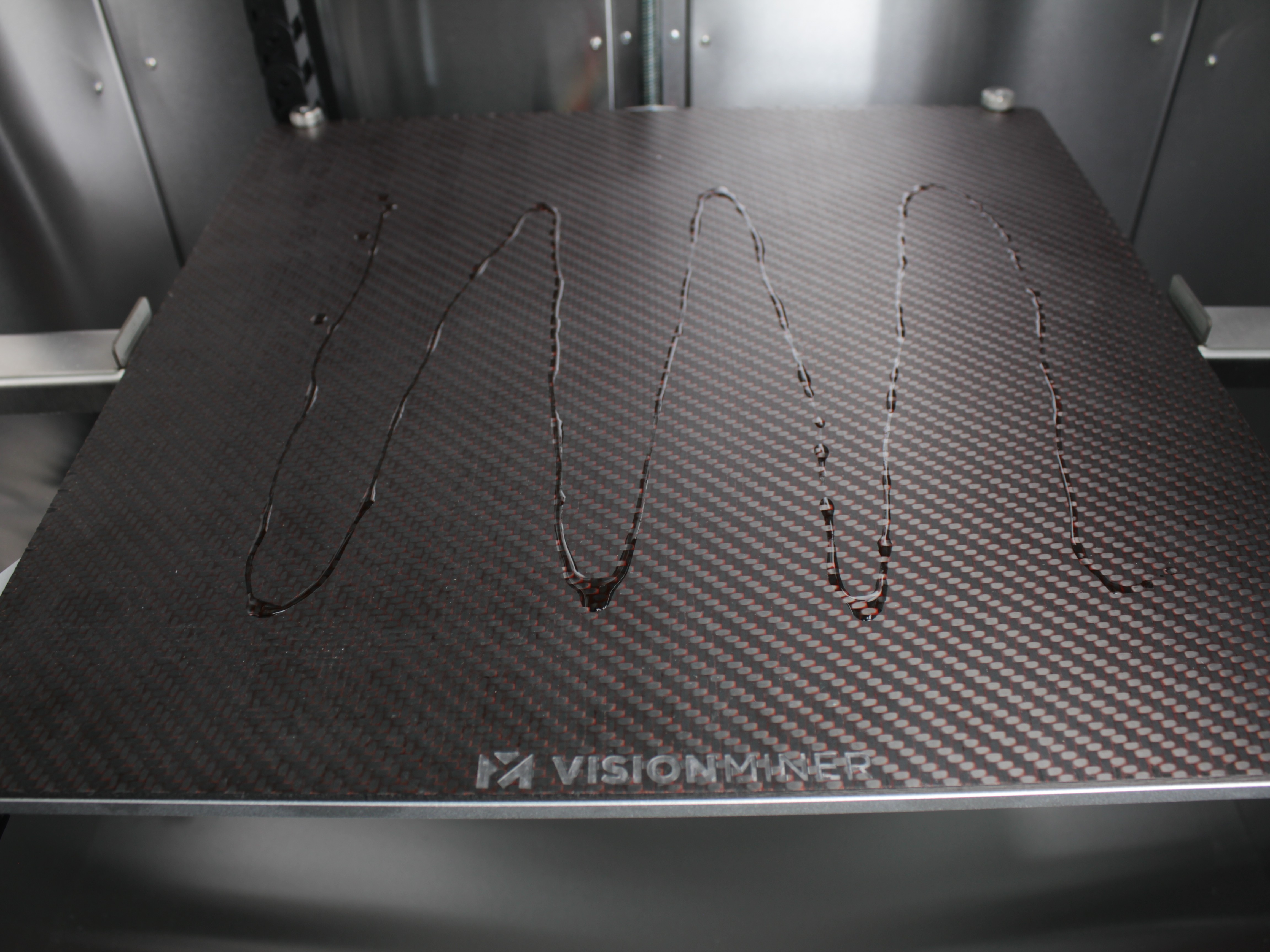
Even distribution extends coating life
Distribute lines evenly across the entire build area. Don't concentrate the adhesive in the center - even coverage extends coating lifespan.
- Immediately use the provided brush to spread adhesive evenly. For the first coat, use horizontal strokes across the plate.
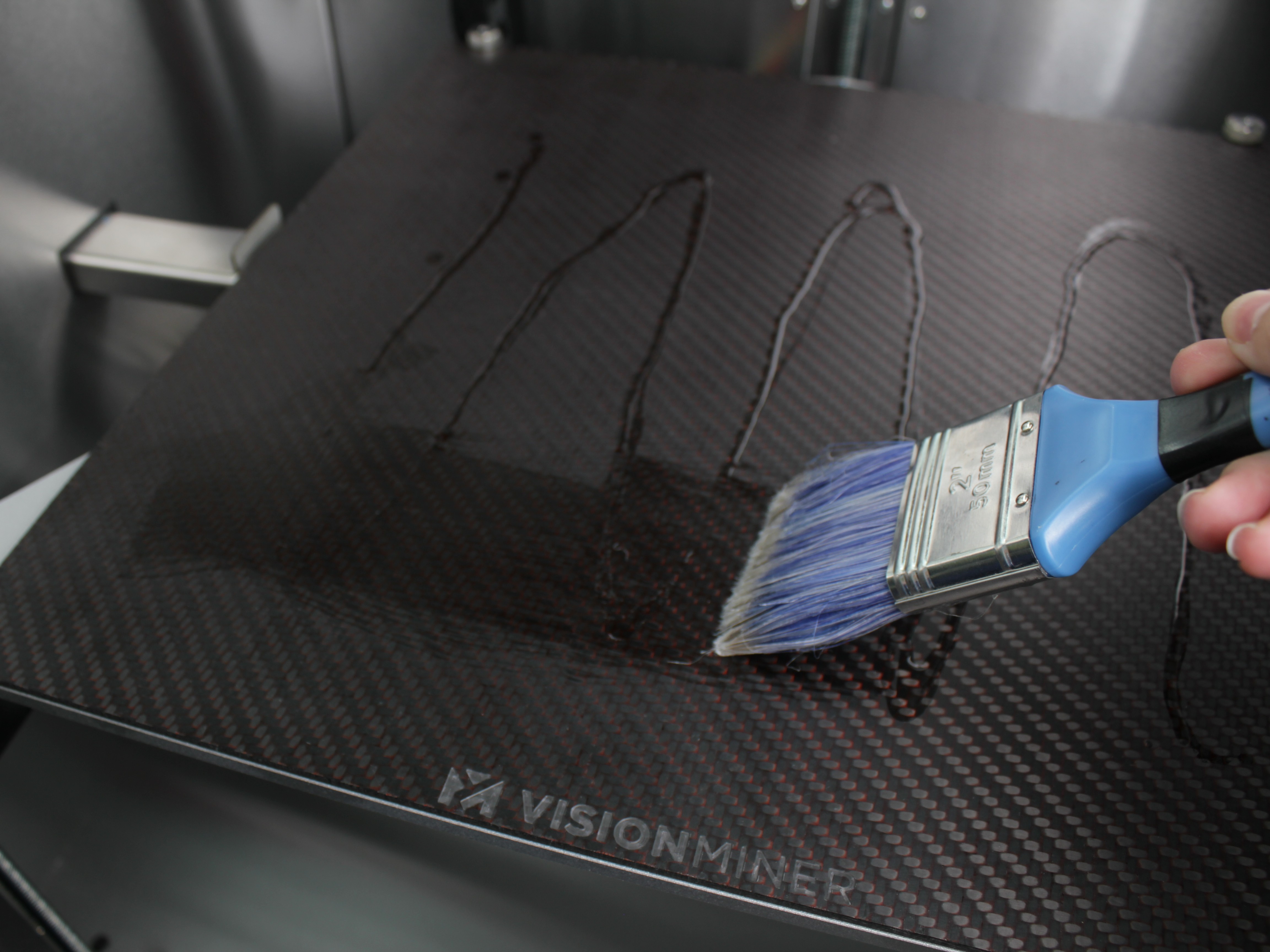
- For brand new build plates, apply a second coat using vertical strokes once the first coat has dried.
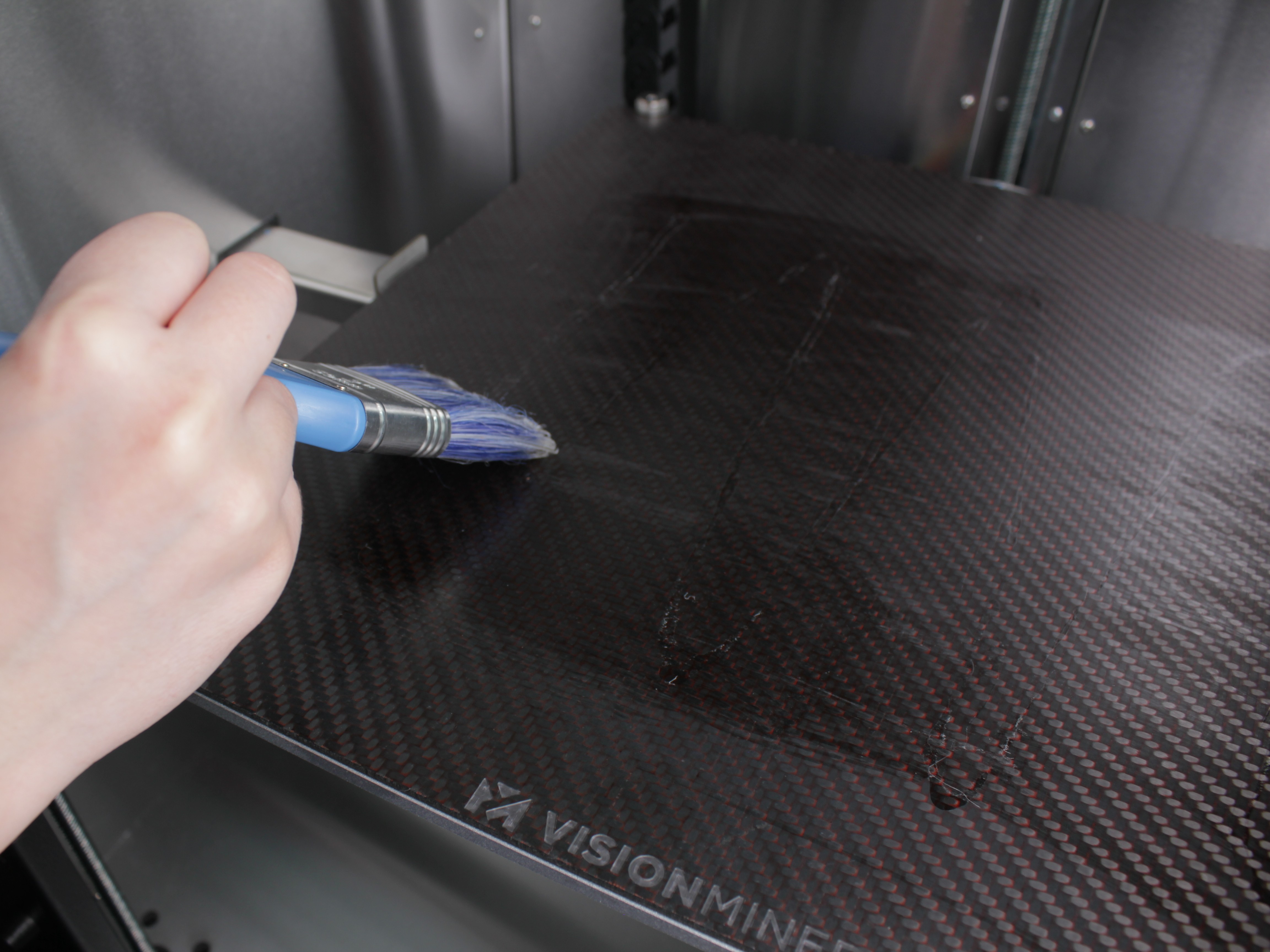
No circular motions
Do not use circular motions - they leave visible marks in drying adhesive that affect surface finish.
- Let the adhesive dry completely. The build plate is ready for printing.
3. Diluted NPA Method (Advanced)
Standard NPA is thick and creates heavy film that layers up over time. Diluted method produces thinner, more even coating that is easier to apply and doesn't build up as quickly. This is the recommended method for experienced users.
Secondary method for experienced users
If applying NPA for the first time, start with the Standard Application above.
Preparing Diluted NPA
- Pour some NPA from the bottle into a small glass jar.
- Add equal amount of isopropyl alcohol (IPA) - ratio is 1:1 (NPA to IPA).
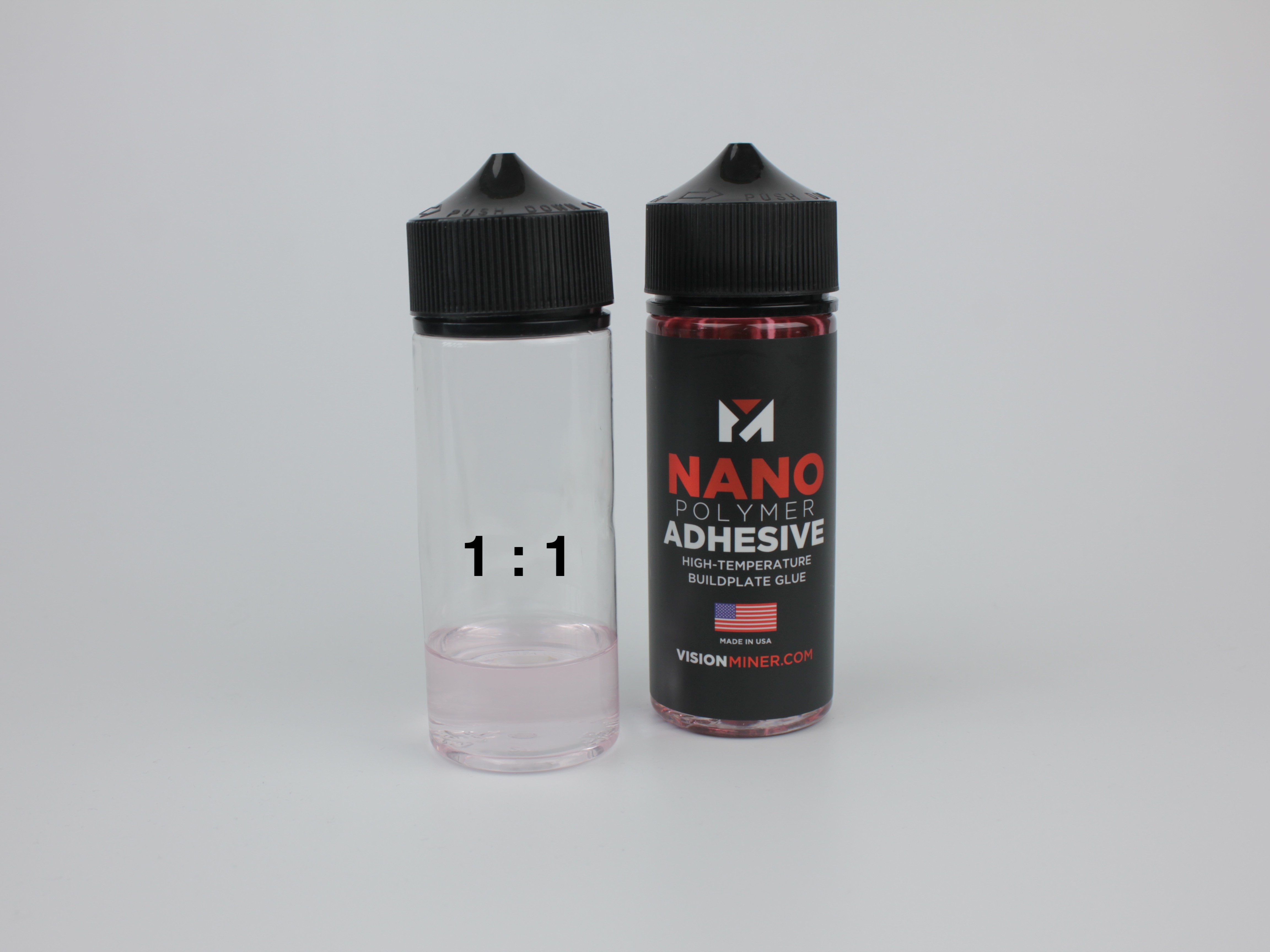
- Mix gently. Result is thinner adhesive that spreads easily and forms thinner film on build plate.
Store in sealed jar
Store the diluted NPA in a sealed jar. IPA evaporates quickly - if left open, the mixture will thicken back to original concentration.
Applying Diluted NPA
- Verify build plate is cold and clean (see Pre-Application Cleaning above).
- Apply diluted NPA to build plate using brush. Because it's thinner, you can brush it on directly - no need to draw lines first.
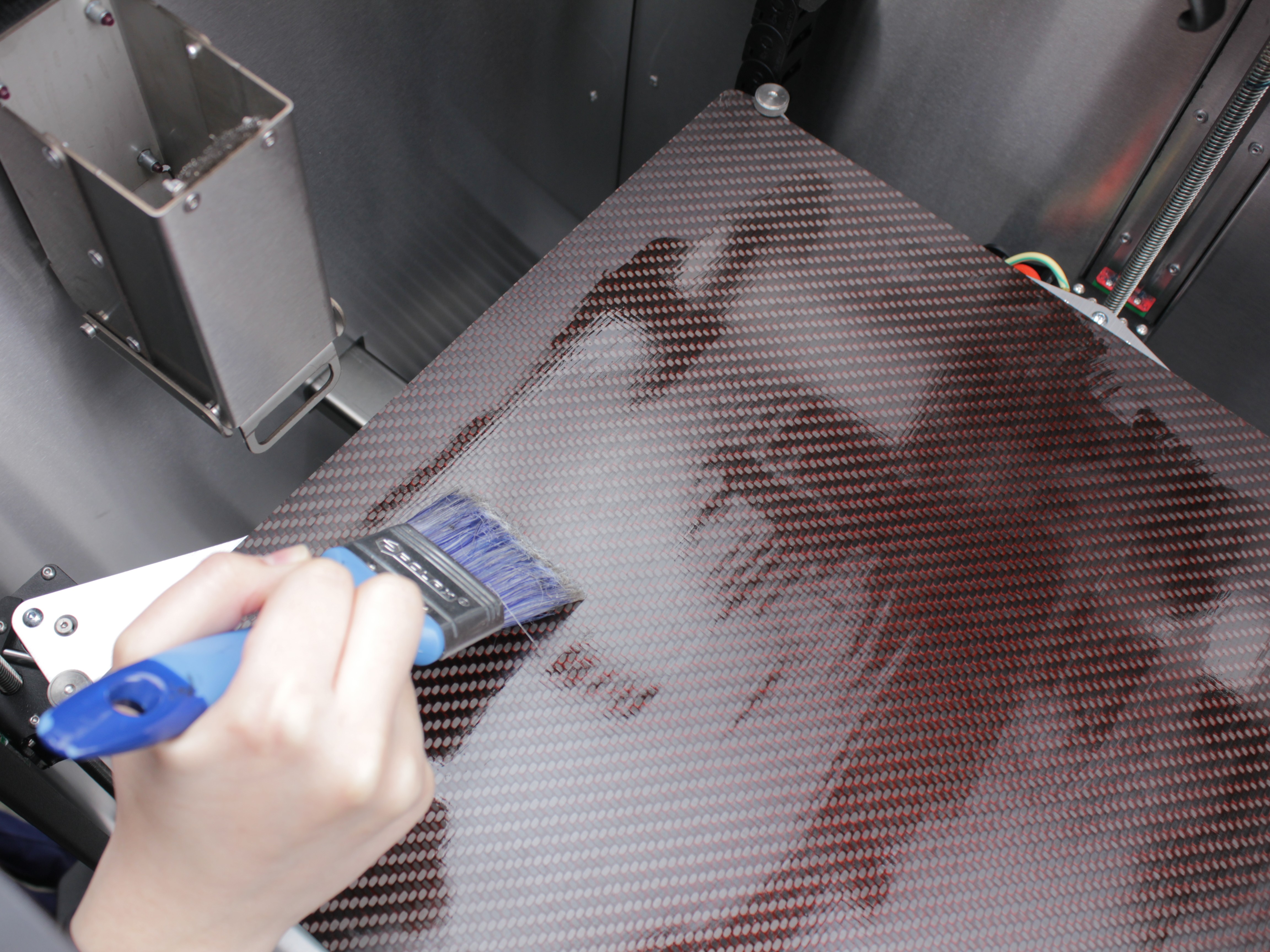
- Use parallel strokes to distribute adhesive. Once you've covered the entire surface, make perpendicular strokes to the first strokes. Coating will be noticeably thinner than standard method.
- Let coating dry completely before printing.
4. Hot Application Method (For Difficult Materials)
For materials with extreme adhesion problems - where the part continues to detach from the bed despite proper NPA coating - the hot application method can solve this problem. Applying diluted NPA onto heated build plate creates very strong bond. This method is typically required only for exotic high-performance filaments such as PEEK, PEKK, PEI, and similar materials.
Hot surface and diluted NPA only
Hot surface: You will work near hot build plate (120-180 °C / 248-356 °F). Wear heat-resistant gloves. Do not touch bed surface.
Diluted only: Use diluted NPA for this method, not standard thick NPA. Standard NPA is too viscous when applied on hot surface and forms uneven, overly thick film.
- Prepare diluted NPA if you haven't already (see Diluted NPA Method above).
- Heat build plate through Web Interface. Start with 120 °C (248 °F) for most materials.
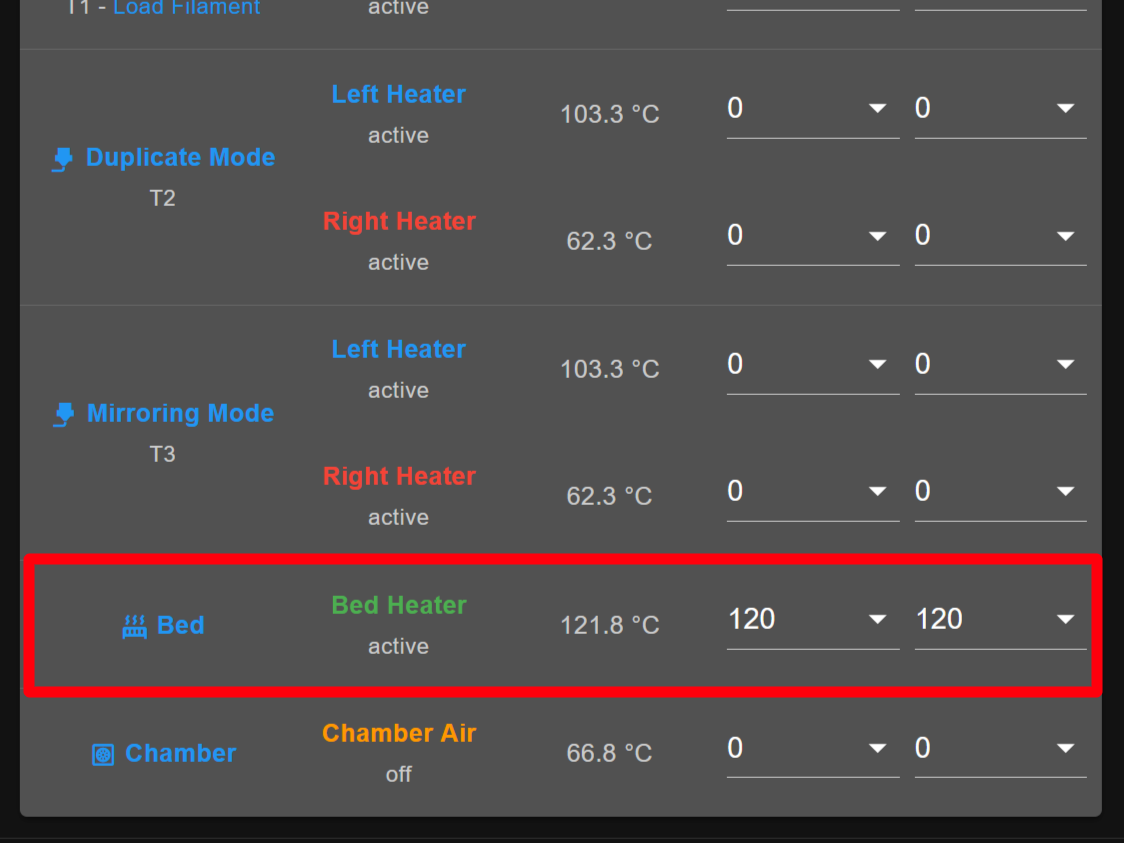
- Once the bed reaches target temperature, use a brush to apply diluted NPA directly onto the hot surface. Work quickly - IPA evaporates fast on a hot bed, leaving thin, even adhesive film.
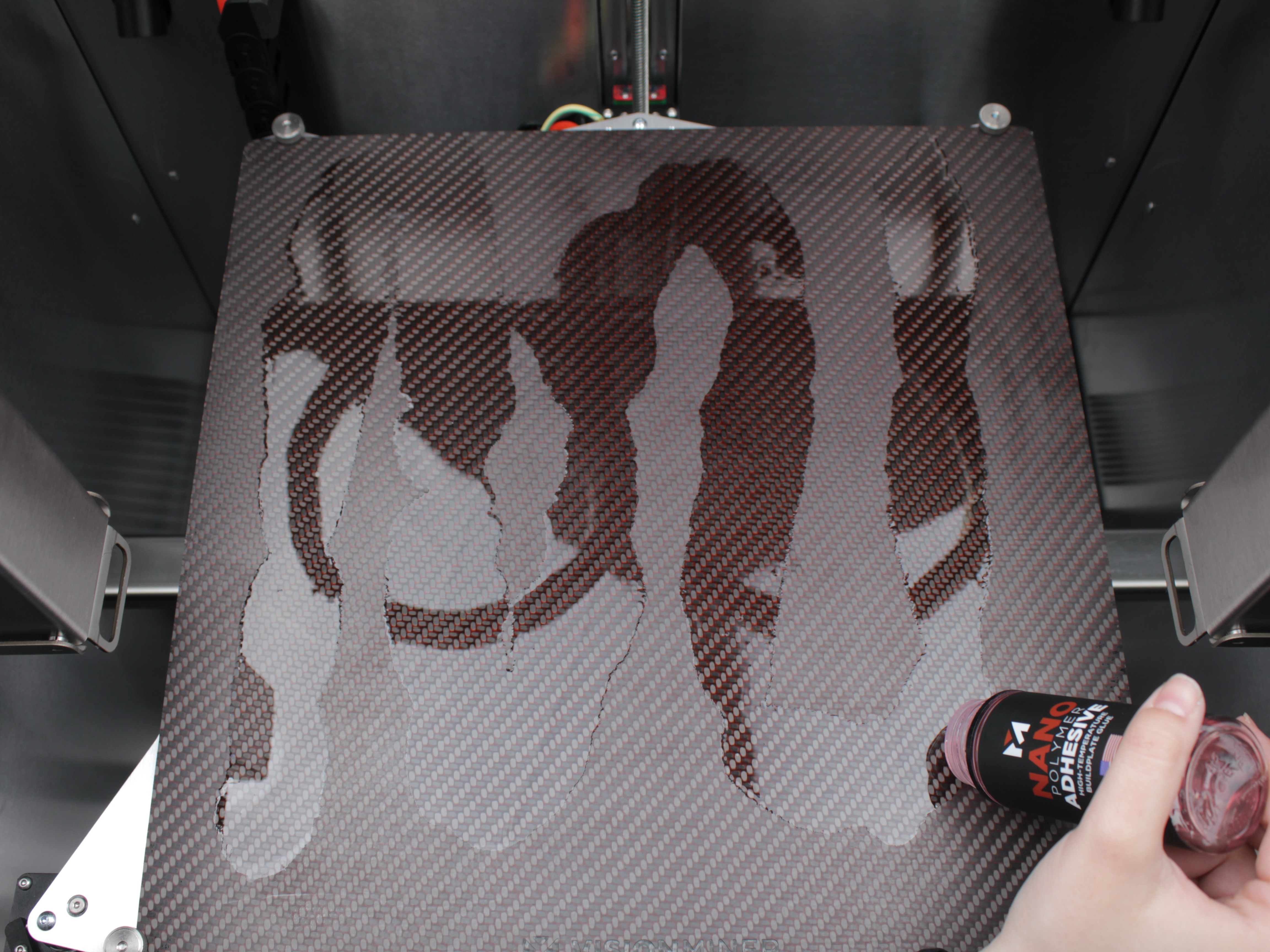
Apply adhesive where part will be located
The photo shows applying adhesive across the entire build plate surface - this is for large high-temperature parts. If you're printing a small high-temperature part, apply adhesive only to the area where the part will be located. No need to cover the entire surface for small parts.
- After application, set bed temperature to value required by your filament profile and proceed with printing.
Temperature recommendations
For PEEK and other high-temperature materials, start at 120 °C for application, then raise to normal printing temperature. For extreme adhesion cases, you can apply at up to 180 °C (356 °F), but 120 °C is sufficient for most situations.
5. Removing Parts After Printing (Self-Releasing Effect)
The grip of NPA naturally loosens as the temperature decreases. To get the best self-releasing effect, cool the parts down after the print finishes. You can let them cool inside the machine, but the effect is much stronger if you remove the build plate from the printer and set it on a cold, solid surface, such as a sturdy table.
The contraction effect. Especially with materials like ABS and ASA, cooling the parts outside the printer causes the plastic to contract rapidly while the carbon fiber plate remains dimensionally stable. You will actually hear the plastic start to crackle as it pulls away from the plate. This often results in the part completely popping itself off with zero effort.
Flex the plate. If the part is still held on after cooling, use the flexibility of the carbon fiber plate to your advantage. Once the plate is cold, use your body weight to bend it. We have never been able to break these plates, so don't be afraid to flex it quite hard. That slight bend is usually all it takes to break the bond and have the part pop right off.
If parts still release too hard. If the standard application holds parts too aggressively even after cooling, switch to the Diluted NPA Method. The thinner, more even coating is much easier to release afterward.
6. Material Notes and Exceptions
Most materials work great with NPA. The main exceptions are materials that stick too well.
Materials that stick too well. ABS and ASA stick exceptionally well, and PETG is almost at the same level. For these materials, always use the cooling and self-releasing techniques from the section above, and consider the Diluted NPA Method for an easier release.
7. Post-Print Cleaning
Cleaning build plate with isopropyl alcohol (IPA) between prints extends life of NPA coating and keeps adhesion consistent. Two cleaning approaches depending on whether you want quick refresh or full clean before reapplication.
Quick Wipe Between Prints
Use this when NPA coating is still in good condition and you just want to remove surface residue before next print.
- After each print, let build plate cool down.
- Apply IPA to lint-free cloth or paper towel - do not pour IPA directly onto bed.
- Wipe the build plate surface to remove fingerprints, dust, and any residue left by printed part.
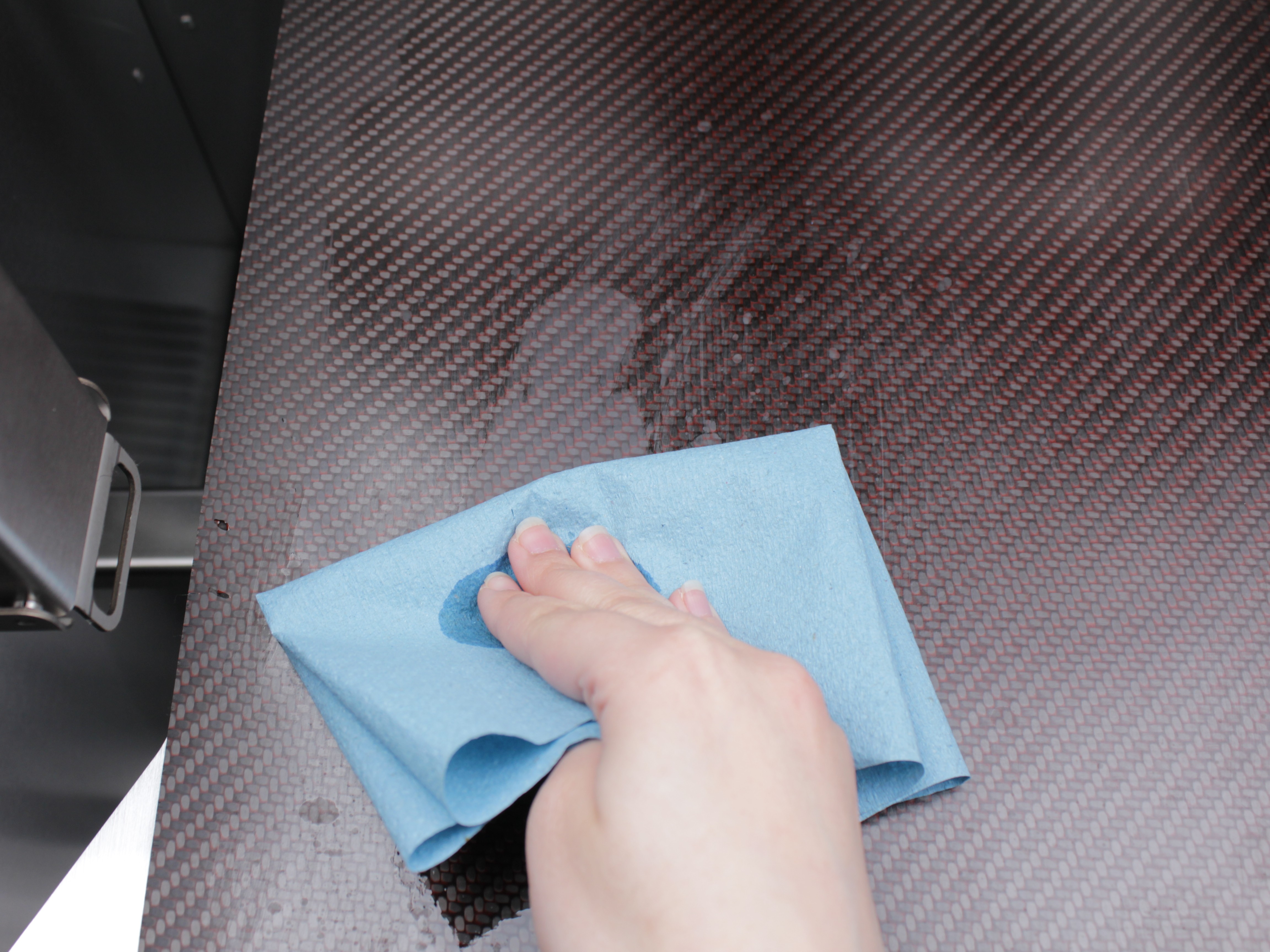
- Inspect surface. If NPA coating is still intact and even, you can print again without reapplication.
Full Clean Before Reapplication
Use this when NPA coating is worn, uneven, or patchy and you want to strip it and apply fresh layer.
- Verify build plate is cold (room temperature).
- Apply IPA directly onto the build plate surface. Let it soak for 1-2 minutes so alcohol softens old NPA coating.
- Wipe surface thoroughly with lint-free cloth. Repeat if necessary until plate is completely clean.
- Reapply NPA following Standard Application or Diluted NPA Method.
8. Complete NPA Removal (Deep Cleaning)
Over time, NPA layers build up and harden. Periodic deep cleaning removes this buildup and restores surface.
- Let build plate cool completely.
- Liberally apply IPA over the entire build plate to soften hardened adhesive. Let it soak for 1-2 minutes.
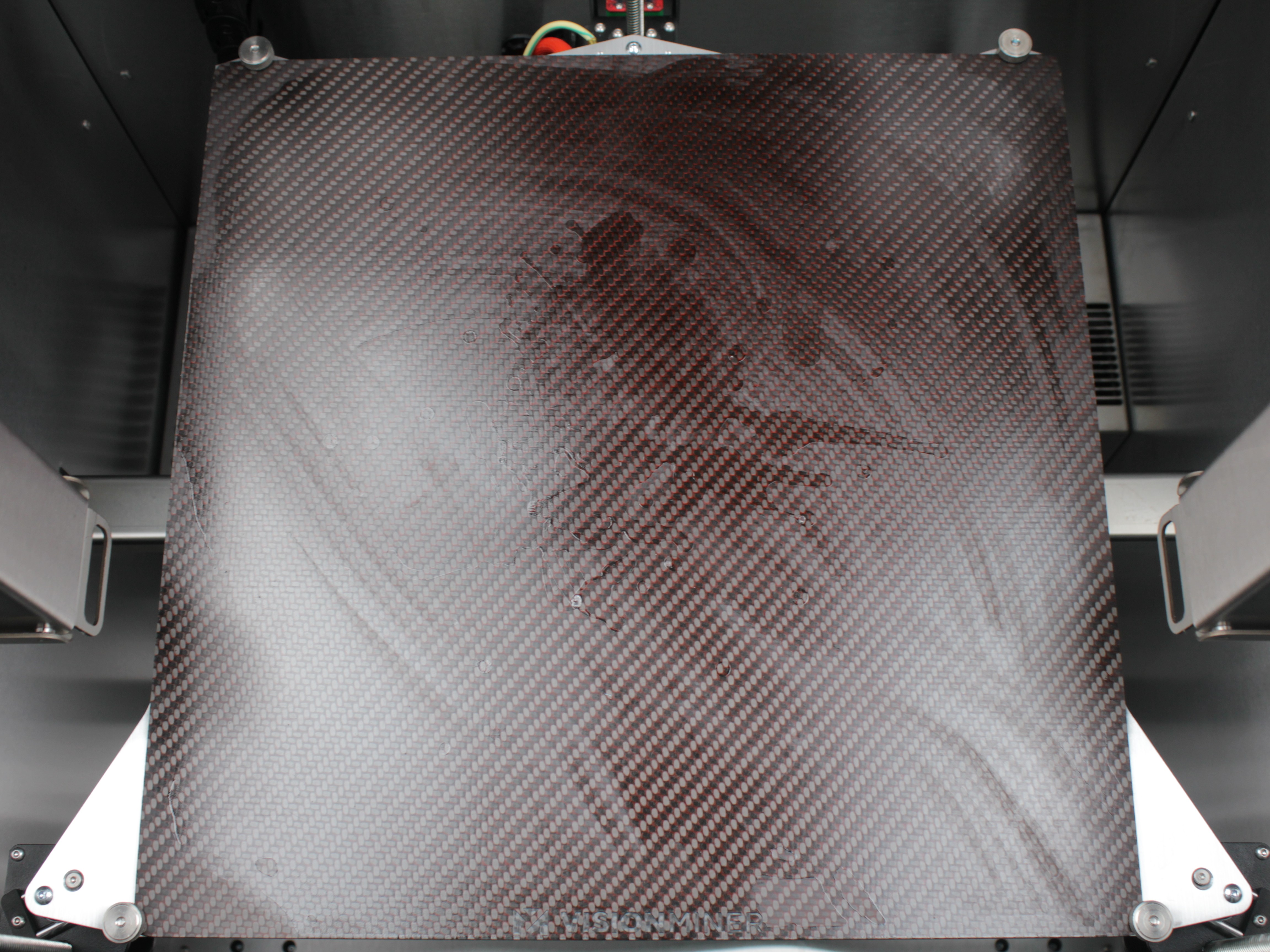
- Use a scraper to carefully remove softened residue. For stubborn spots, gently run the brand new razor blade along the surface at a shallow angle.
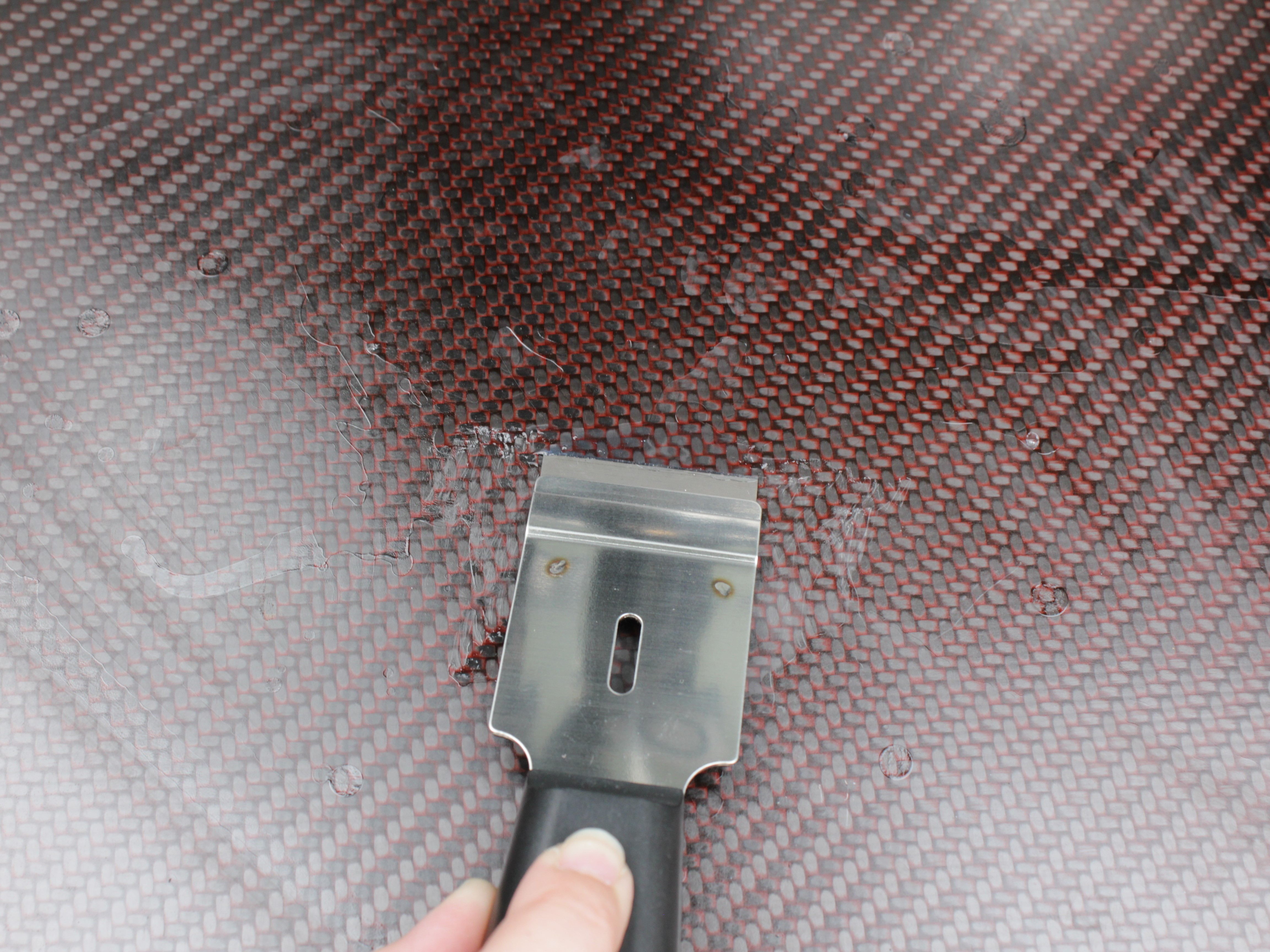
Work slowly with razor blade
Work slowly with the razor blade. Pressing too hard or using a used blade can scratch the carbon fiber build plate permanently.
- Wipe the plate one final time with a clean lint-free cloth dampened in IPA. Confirm the surface is completely clean.
FAQ
Troubleshooting
Support
If you could not find an answer here, reach out to our support team.